This article is part 1 of 2, of Adaptive EQ’s Fundamentals Series, Fundamentals: On The Seat. To read Part 2, see: Riding Fundamentals: The Seat (Part 2 of 2).
The Seat
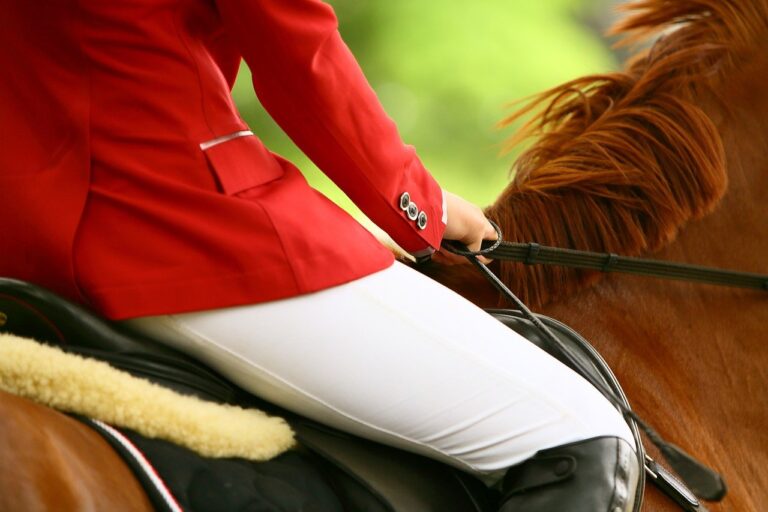
It is with our center of gravity, seat, and legs that we obtain the greatest overall influence in communicating with our horses. Of primary importance, we use our seat to anchor ourselves, and remain in balance with (and aligned to) the horse’s center of gravity. We also use the seat as an aid to our communication with the horse when we request them to execute the specific movements that we desire.
Our Center of Gravity
In an earlier post we covered leg position, and when we combine this with the position of the seat, what we achieve is a center of balance that is in unity with the horse’s center of balance. It is when our centers of gravity between horse and rider unite, that the horse is finally able to carry the rider’s additional weight in a way that most closely matches its natural balance (natural balance, being the horse’s ability to balance and execute various maneuvers without a rider – from the three basic gaits, to the more exotic movements we see when they are at play in the field). When we obtain a seat that is in balance with that of the horse, all of our other requirements of a fine riding horse can be developed: relaxation, suppleness, rhythm, sensitivity, etc. It is truly as simple as that; a correct seat position is the one that gives the greatest support (or least interference) to the horse’s natural movement.
This truth holds across all disciplines: dressage, hunter/jumpers, eventing, flat racing, the western disciplines, endurance and others, and really there is no other detail needed, except to give examples that show us proof of this. The saddle of each discipline is also specialized in order to more easily facilitate the changes in balance and seat position required.
Dressage
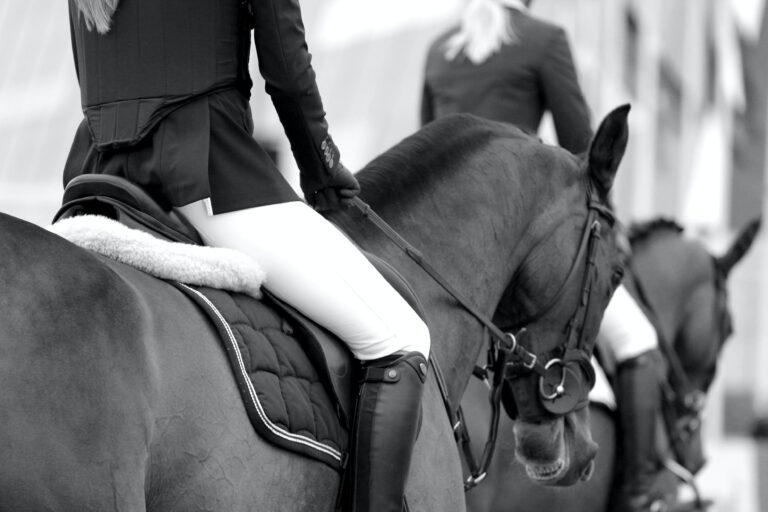
Our training in dressage steadily works toward shifting the horse’s center of balance onto the hindquarters, with an increasing ability to collect as the horse develops. At the highest levels, movements such as the levade demonstrate the full transfer of weight to the haunches. As the horse’s balance shifts rearward through training, the rider’s center of gravity follows. Dressage riders therefore maintain the longest stirrups and the most open hip angle, allowing the body to stay aligned with the horse’s upward and collected movements.
Hunters, Jumpers, and Eventers

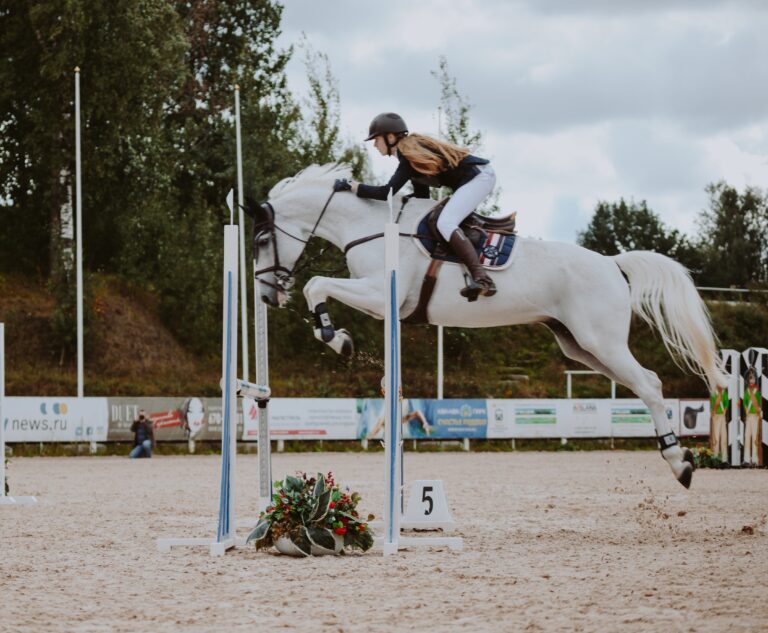
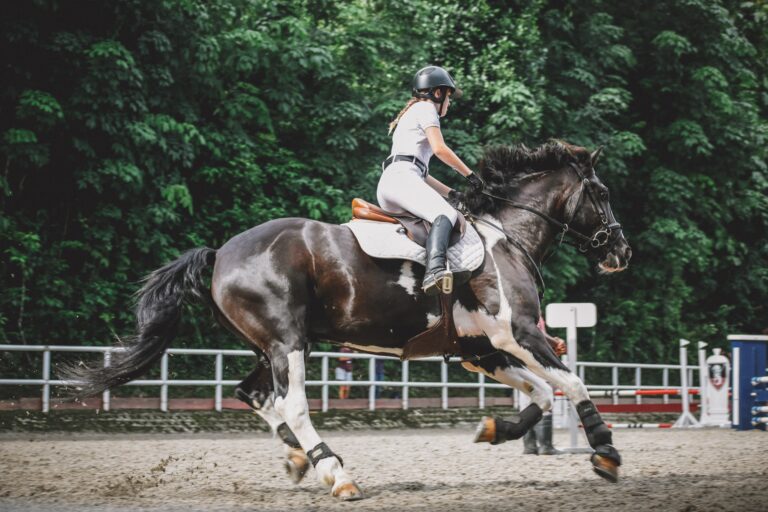
Riders in this category use what is commonly referred to as a “forward seat,” though in practice it represents a middle ground between upright and fully forward positions. The seat adjusts dynamically depending on the demands of the course: moving into a half seat over fences, and shifting back to a seated position between obstacles in order to stay with the horse through rapid shifts in balance and speed. Compared to dressage, the rider’s hip angle is more closed, and the center of gravity shifts forward. As jump height increases, stirrups are shortened to accommodate the horse’s greater lift requirements through the shoulders.
Flat Racing and Steeplechase
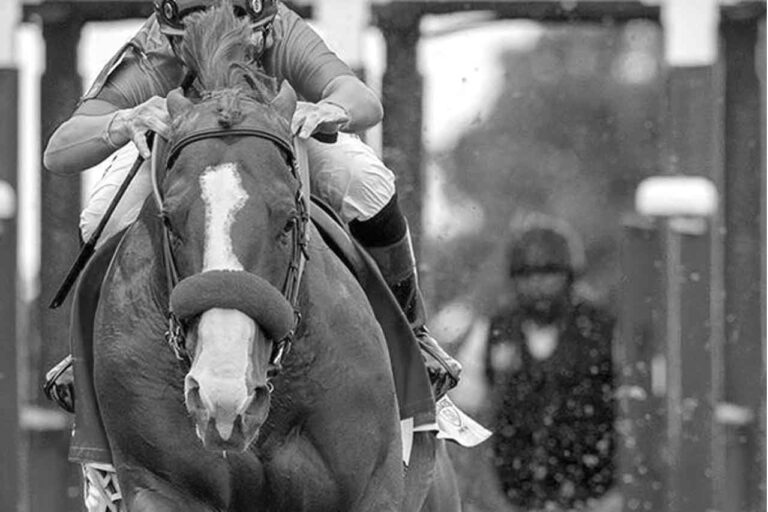
At the opposite extreme from dressage, a horse at full gallop carries its center of gravity predominantly over the shoulders. To remain balanced and allow the horse full freedom of motion at speed, the jockey adopts a highly forward position with the shortest stirrups of any discipline. The hip angle closes significantly, and the upper body folds forward over the withers. At this velocity, the rider’s position must become extremely compact to remain efficient, with the knees and upper body drawn close together. This allows the rider to be aerodynamic while maintaining the strength required to stay still at such speeds.
Conclusion: Different Seats, Same Rules
So we see that it’s all about center of gravity. From one extreme to the other, what remains consistent is:
- A rider’s center of gravity aligned to the horse
- The rider’s stillness in keeping to that center of gravity
This allows the horse to retain its balance at the speed or within the specific movement required of it. Whether we are shifting that balance and momentum towards the hind quarters in dressage, or shifting that balance and momentum towards the shoulders and hurtling towards the finish line during the last quarter mile of a race, this rule of a balanced and quiet seat position remains the same.
Continuing the Series
To finish reading this article, click here to read Part 2 of the series: Riding Fundamentals: The Seat (Part 2 of 2). To learn more or inquire about training with Adaptive EQ, contact us.

Euki Binns
Euki is the founder of Adaptive EQ. She loves inspiring riders and owners through the developmental process of holistic, whole-horse training, and is on a mission to help them rediscover their horses and fall in love with them all over again.